
 By
By 
Solid Conditioner Bars
Over the last year, my exploration into fashions of the past has led me to examine other things that have changed over the years…most notably hair care. Those who have watched my videos will have noticed that there’s quite a lot of hair attached to my head, and having it “in my face” a lot (and I meant that quite literally) means that I tend to take an active interest in all things hair care. While perusing old magazines and publications, I was quite struck by the changing nature of hair balms, tonics and cleansers. This has lead me down a rabbit warren of natural (and questionable) recipes and changing techniques. Whether it’s water only washing, egg mixtures, lye soaps or natural plant cleansers, I’ve tried various techniques to clean my locks. Herbal teas or vinegar rinses or even oiling my hair has not been out of the question. I’ve experimented A LOT!
So now, I’d like to share some of my updating of older hair care techniques…starting with soap.
Ages ago, humans discovered that mixing fats with lye created an excellent cleaning product that we know as soap. It’s excellent for cleaning hands and clothes, so why not hair? It was used for hair quite a lot in the past – it gets out the oils that the scalp produces and cleans the grime the accumulates. However, it leaves hair stripped and difficult to comb, and with a high pH, it leaves the hair out of balance and prone to breakage. A vinegar rinse helps off set the pH problems, and hair balm or oils might help replace what’s stripped, but I think theses days there’s an easier way to wash with bars…so that’s what I’ve made today…a cleansing CO-wash bar! It looks like soap, but it’s a completely different, milder way of caring for your hair. Plus, it can be more eco-friendly and sustainable that petroleum or palm derived products 🙂
CO washing, or conditioner only washing, has been a recent thing for girls with curly hair, and recently I’ve discovered that my hair has quite a bit of curl. Many conditioning ingredients have mild surfactants that will clean your hair while nourishing, and in so doing, it helps promote your natural curl pattern. The CO method means that you avoid sulphates and silicones in your products, and I’m all for cutting some of those from my life.
For this experiment, I’m going a bit scientific…I’m basing it around a plant-based wax called BTSM 50 (behentrimonium Methosulfate). Chemicals sound scary, but looking into it, this is derived from rapeseed oil (canola), and it’s a great for making hair feel silky and moiturised, at it will also help the other oils an butters in the bar combine with water. I have found that camellia oil great for hair – something that Japanese women through the centuries have known, but anything like olive or coconut oil could be used. Butters help with the texture as well as holding moisture in the hair – I’ve used cocoa butter because it’s one of my favourites. Essential oils – great not only for their natural fragrance, but so many have different active benefits for your hair.
So, here’s the recipe I worked with for my first attempt at CO-wash bars (makes 3 little 20g soaps):


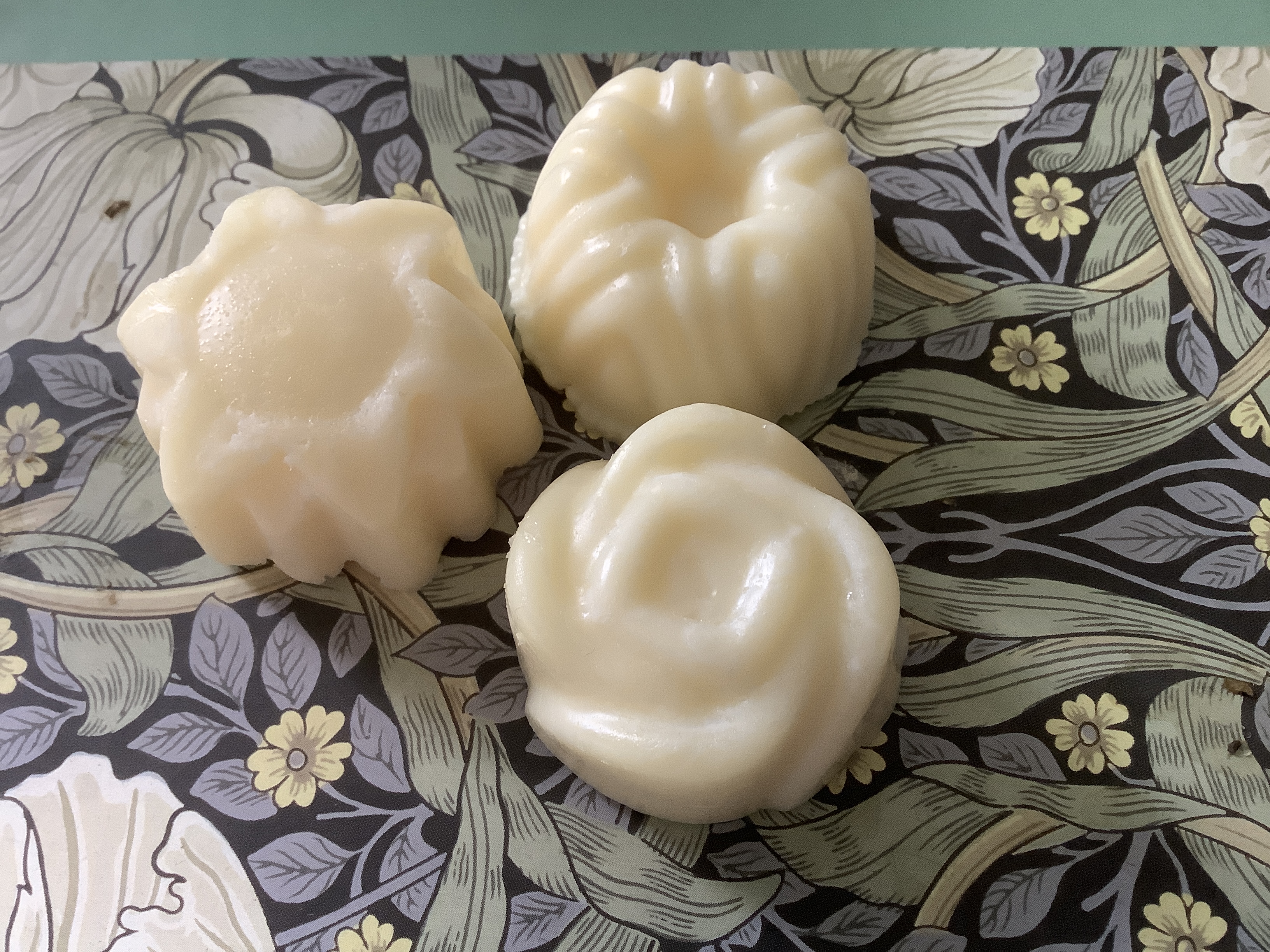
CO-Wash Bars
Phase 1
- 50g BTMS 50 (you could sub BTMS 25, it will just be less conditioning)
- 2.5g Cetearyl Alcohol (AKA Cetyl Stearyl Alcohol – a fatty alcohol derived from coconut palms – also a moisturising emulsifier)
- 2.5g Cocoa butter (or shea, mango butter etc)
- 2g Camellia oil (could also try coconut, olive oils etc)
Phase 2
- 1.5g sodium lactate (you could use vegetable glycerine)
- 1g Dl Panthenol (AKA Pro vitamin B5 – optional but nice)
- 1g Essential oils ( I used a mix that included – White Grapefruit, Valencia Orange, Patchouli, Geranium Egyptian, Ylang Ylang Complete and Jasmine Absolute)
- 0.5 g preservative (I use Nipaguard SCE as it’s ECO-Cert approved and I don’t want them to go yucky if they stay wet…you can leave out the preservative if you’re going to use them quickly and dry out completely between use)
Method
- Place the Phase 1 ingredients in a double boiler or water bath and allow to melt – probably around 70C.
- Meanwhile mix together the Phase 2 ingredients and prepare your silicone moulds.
- When completely melted, remove Phase 1 from the heat and allow to cool slightly (it will thicken quickly, so don’t leave too long). Add the phase 2 ingredients and stir well.
- Pour into moulds and allow to set completely before unmoulding.
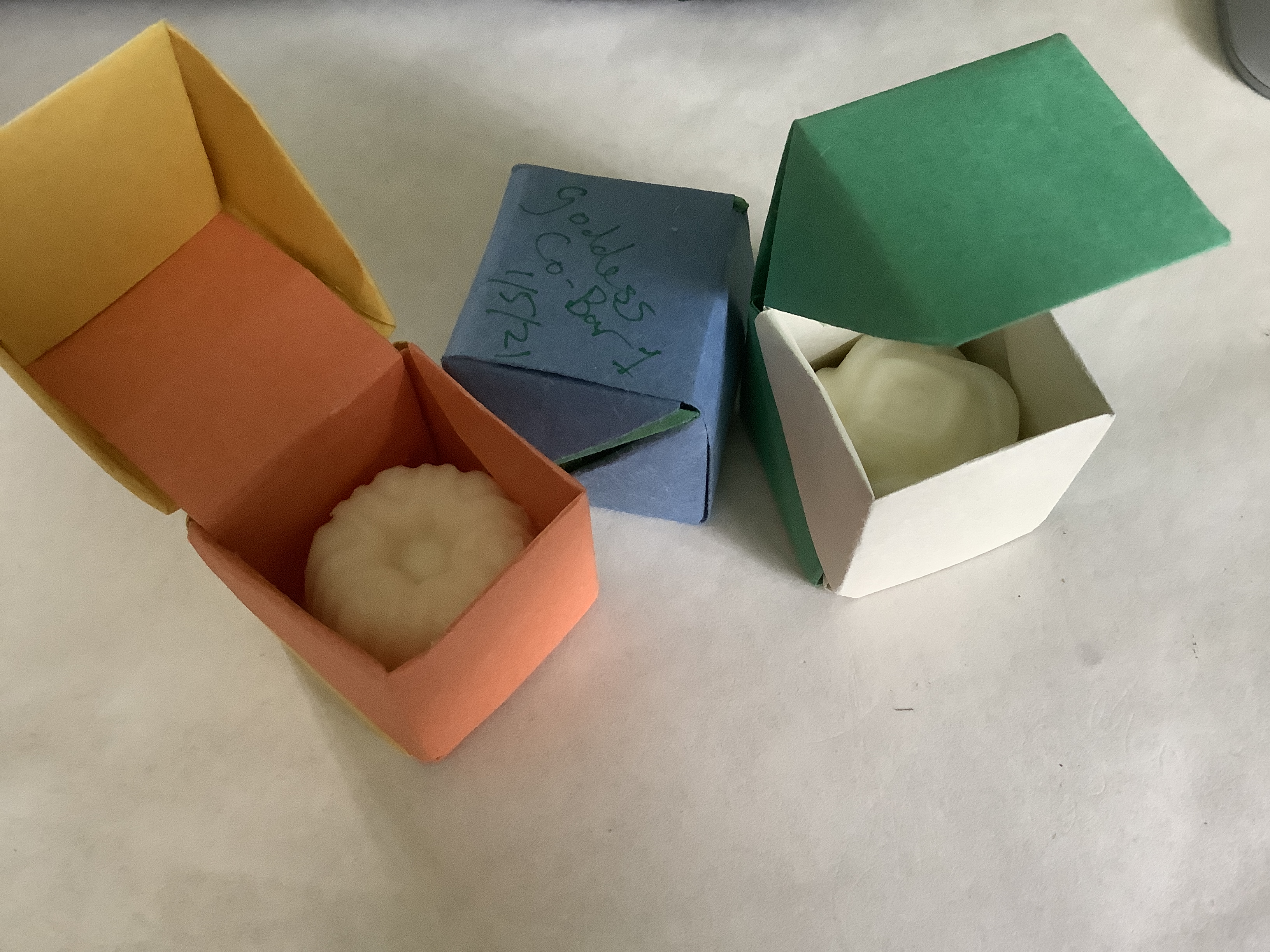
I’m leaving mine to sit for a few days before using them and made cute little origami boxes to store them in. I did use the mixture that was left in my mixing jug on my hair last night, and it was lovely! I’m looking forward to trying more of these and refining my mixture!


This looks interesting! i have been using a conditoner shampoo bar from a local company for a while but I always have to use vinegar rinse afterwards because the conditioner bar leaves a greasy mess on my hair even though my hair is dry and frizzy. I just started using some spray in natural oil/conditioners and my hair seems to like that.
LikeLike
wow!! 35Making an Austen Era Chemise & Fichu
LikeLike